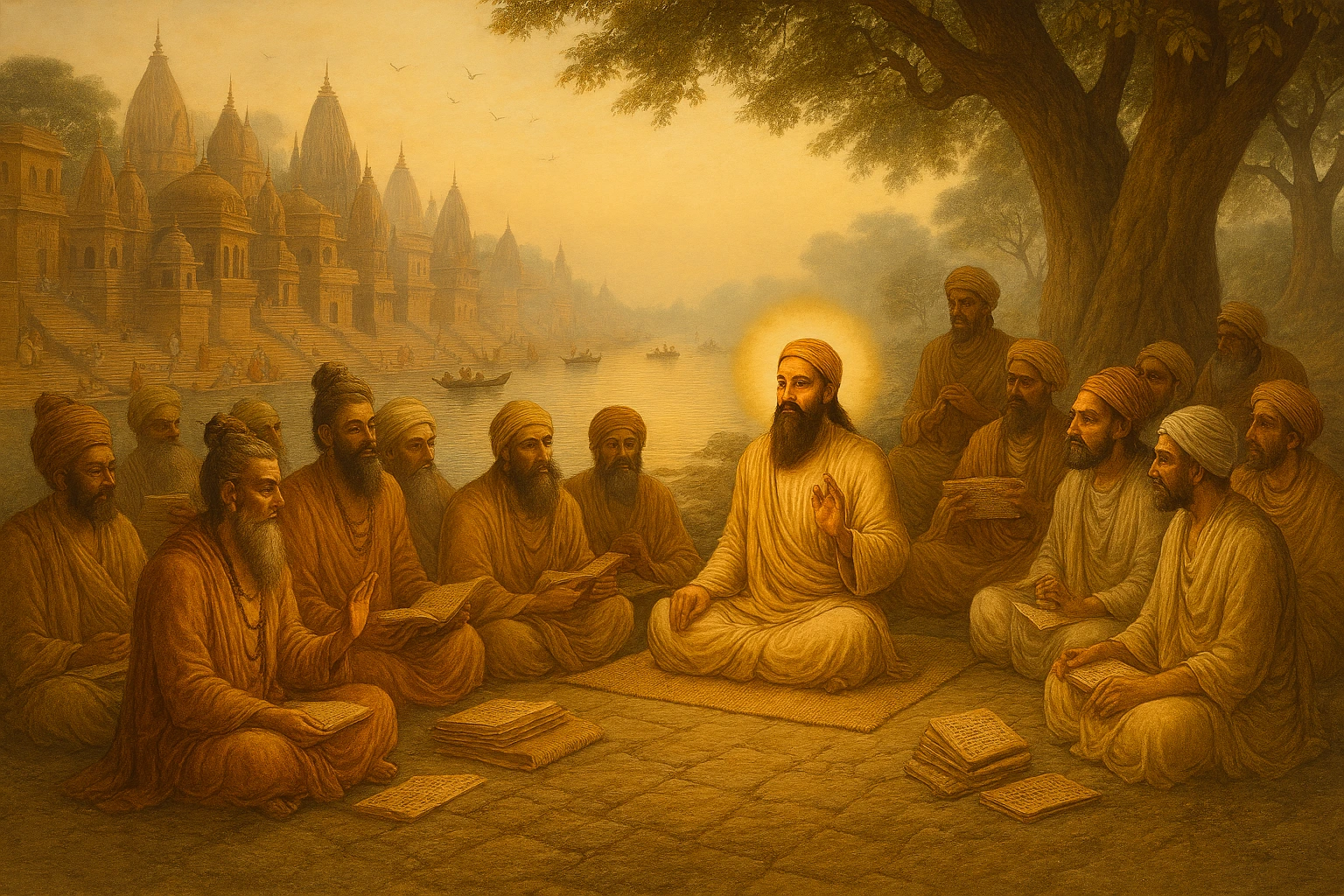
Bhagat Ravidas ji
The Saint Who Rose Beyond All Boundaries
Bhagat Ravidas Ji was born in Banaras during the great Bhakti Movement, a time when the fragrance of devotion was spreading across every corner of India. It was an era when enlightened saints, drenched in divine love, sang the glory of the One.
Har jug jug bhagat upāye — in every age, the Divine sends blessed souls to guide humanity. Bhagat Ravidas Ji was one such jewel.
From childhood, he was gentle, devotional, joyful, and deeply connected to the Divine. As he grew, his bhakti blossomed, and his wisdom became luminous. Although by profession he worked as a cobbler, his consciousness resided at a much higher plane.
Maskeen Ji beautifully explains : A person who lives only at the level of the five senses — concerned only with the body and its pleasures — is the true “cobbler.” But Ravidas Ji had risen far above body-consciousness and reached a state of spiritual awakening.
In those times, occupations like cobblers, ironsmiths, and weavers were labelled as “low caste” by society. People who lived in ignorance denied them equal rights and respect. Because of this, Bhagat Ravidas Ji was often not allowed to enter religious institutions.
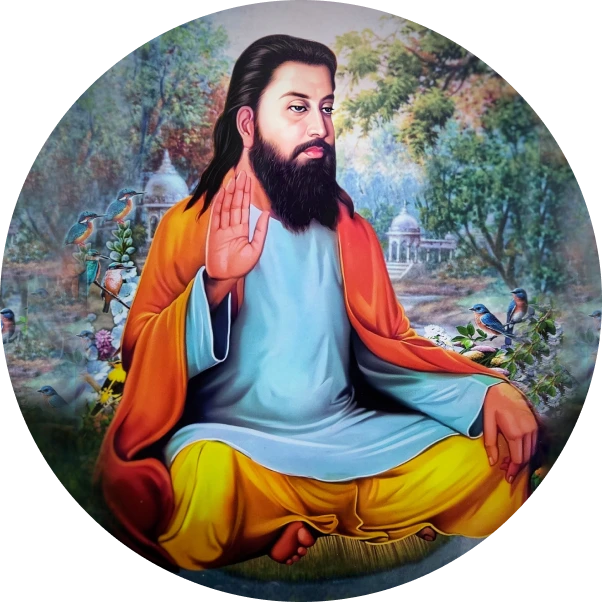
But external barriers could not stop the inner blossoming of a saint. His continuous devotion awakened divine consciousness within him, and streams of celestial poetry began to flow from his heart.
Maskeen Ji says that devotional music is very close to God, for God Himself is the supreme artist who created this universe. Through his divine shabads, Bhagat Ravidas Ji brought peace to countless hearts.
On one side, he mended the shoes of his customers. On the other side, he mended their hearts — connecting them with the Divine through his hymns.
His humble work became sacred, because it carried the fragrance of spirituality.
Maskeen Ji adds that a person may appear religious from the outside, but if their inner intention is filled with ego and worldly greed, then there is no purity. Bhagat Ravidas Ji, however, turned even simple labour into worship.
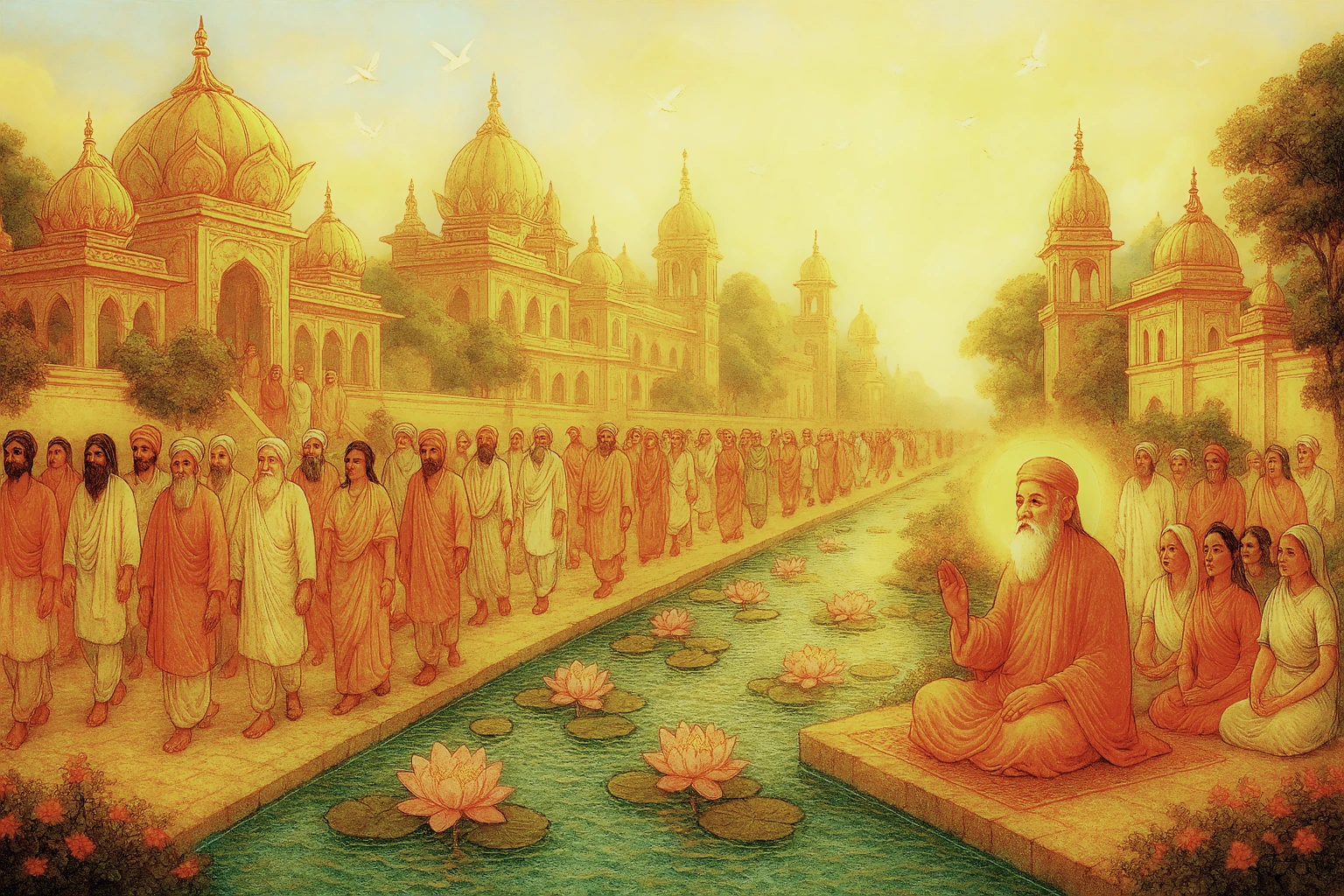
Begampura — The City of no Sorrow
Once someone asked Bhagat Ravidas Ji where he belonged. He replied with divine vision:
“Begampura, shehr ko nāo…”
A place where there is no fear, no anxiety, no deceit — a city beyond suffering.
Maskeen Ji says that everything in this world grows and then declines. Everything that has life eventually dies. But Ravidas Ji reached such a state of consciousness where there was no birth, no death — only bliss.
The Brahm Bhoj in Jhalawar
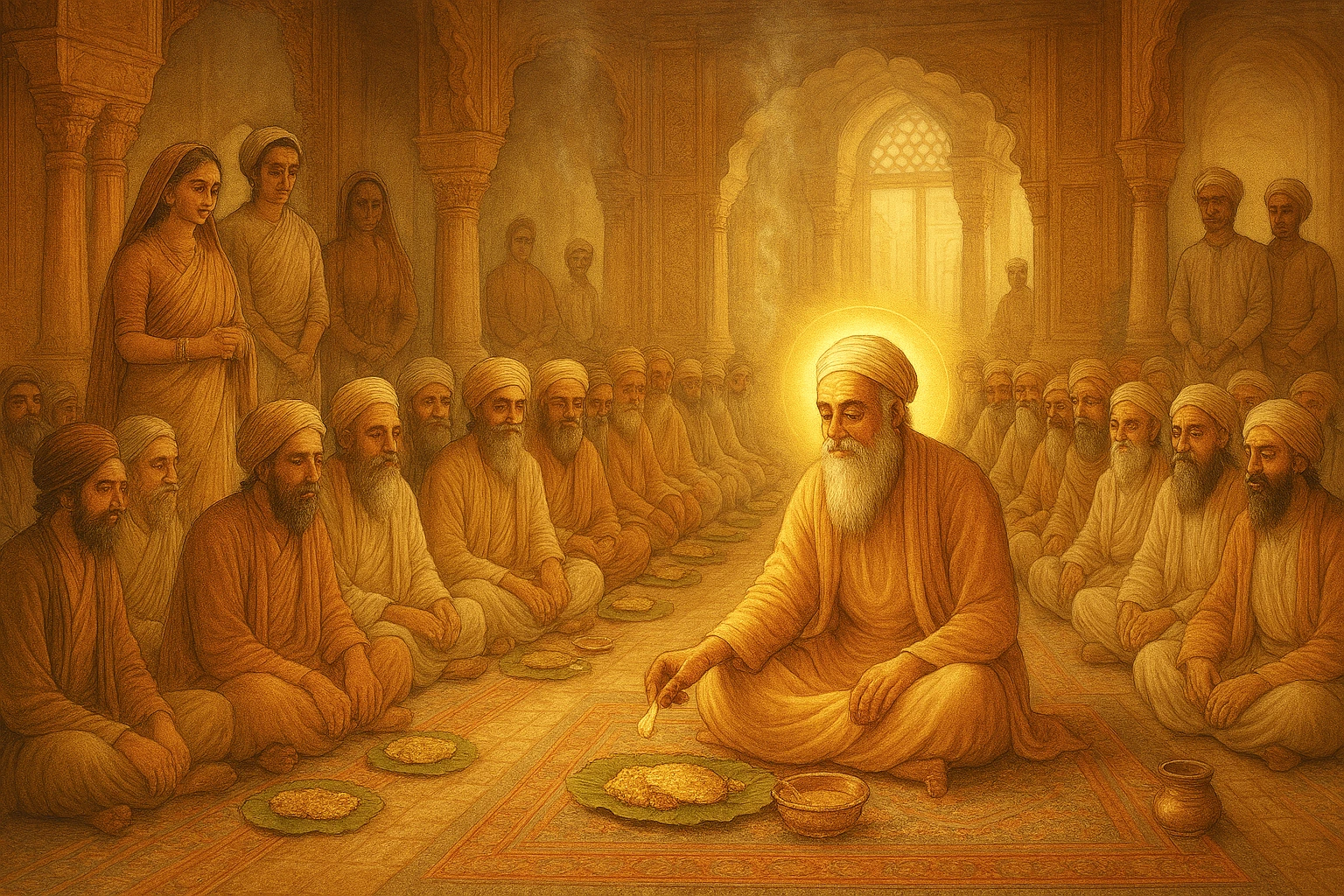
Once, the queen of Jhalawar was deeply touched by the devotion of Bhagat Ravidas Ji. She organized a Brahm Bhoj and respectfully invited him along with many Brahmins.
When the Brahmins heard that a “cobbler” had been invited, they refused to eat. They said they would not sit with him.
The queen felt distressed, but Bhagat Ravidas Ji, in his humility, said gently, “I will not sit with them. I will sit outside the palace.”
However, when the Brahmins began eating, they were shocked to see that Bhagat Ravidas Ji appeared beside each one of them — a divine vision granted by the Lord.
Stunned by this miracle, the Brahmins fell at his feet. In that moment, Bhagat Ravidas Ji sang:
“Aisi lāl tujh bin kaun kare…” (O my Beloved Lord, who else but You performs such wondrous deeds!)
The Debate in Banaras
Once in Banaras, a Brahmin priest argued that a “chamar” — a cobbler — had no right to teach scriptures or perform worship.
Bhagat Ravidas Ji replied with profound clarity:
“I am one with God now. When there is no separation, there is no impurity.
You consider yourselves separate from the Divine — and anything that remains separate becomes impure.”
- The water of the Ganga is pure, but if it is used to make alcohol, a saint will not drink it. It becomes impure because it has changed its nature.
- But if a bottle of alcohol falls into the Ganga, the water does not become impure. The alcohol dissolves and becomes sanctified within the purity of the river.
Likewise, Ravidas Ji said:
“Even though I was born into a cobbler’s family, I raised my consciousness and dissolved myself into God. Now I am pure.
But you, who claim high birth, still feel separate from the Divine. This separation — this ego — is the true impurity.”